AMH
1. Introduction:
Anti-Müllerian Hormone (AMH) is a hormone produced by granulosa cells of growing ovarian follicles. Because AMH levels are related to the number of growing follicles, it is widely used as a marker of functional ovarian reserve.
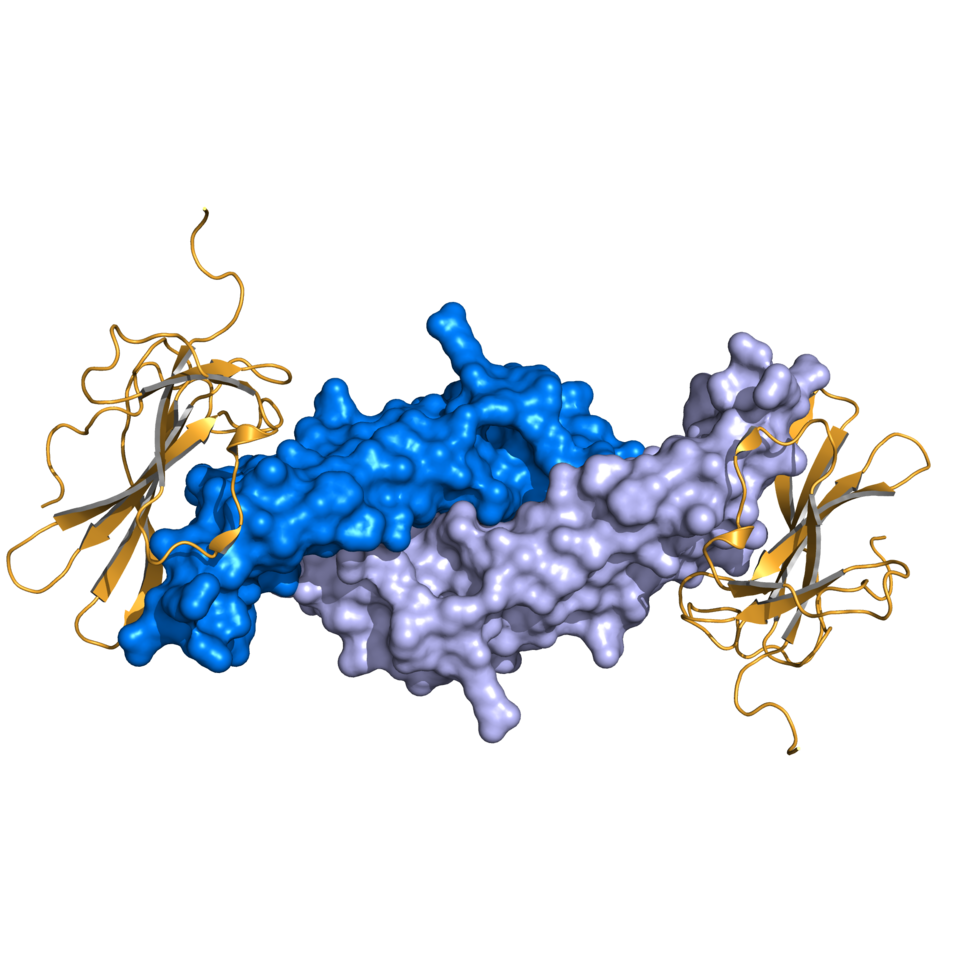
the picture shows AMH bound to its type II receptor, AMHR2:
2. AMH in ovarian reserve research
Researchers measure serum AMH to estimate the quantity of growing follicles in the ovaries. Generally, higher AMH levels are associated with a greater number of growing follicles, while AMH levels tend to decrease with age as ovarian reserve declines.
AMH can therefore be studied in:
- Ovarian reserve assessment
- Fertility and reproductive research
- Ovarian aging
- Assisted reproductive treatments
- Ovarian response to stimulation
Importantly, AMH is a marker of ovarian reserve, not a direct test of fertility or egg quality
3. How is AMH measured?
The most common approach is to measure AMH in a blood/serum sample using an immunoassay, including ELISA or automated immunoassays.
A simplified ELISA workflow is:
Blood sample → Serum → AMH captured by antibodies → Detection antibody → Signal generation → AMH concentration
The result is compared with standards to determine the AMH concentration in the sample. Different AMH assays can produce different results, so assay methodology and standardization are important when interpreting measurements.